My Views On Dark Matter
My views on dark matter, what is it and why is it.
What Is Dark Matter?
Dark matter acts as the invisible glue holding the universe together a mysterious substance that surrounds us and makes up most of the matter in existence.
It accounts for most of the mass in galaxies and galaxy clusters. Scientists estimate ordinary matter makes up only about 5% of the universe, while dark matter makes up around 27%.
Discovering Dark Matter
In 1933 Swiss born astronomer Fritz Zwicky published a paper describing an anomaly he found while studying the Coma Cluster, a cluster of galaxies. He noticed the galaxies were moving too fast for the gravity produced by the cluster's visible matter alone fast enough that they should have flown apart, yet they remained bound together.
Zwicky proposed that an invisible form of matter was supplying the extra gravity holding the galaxies in place. He called this mysterious substance "dunkle Materie," German for dark matter.
Studying Dark Matter
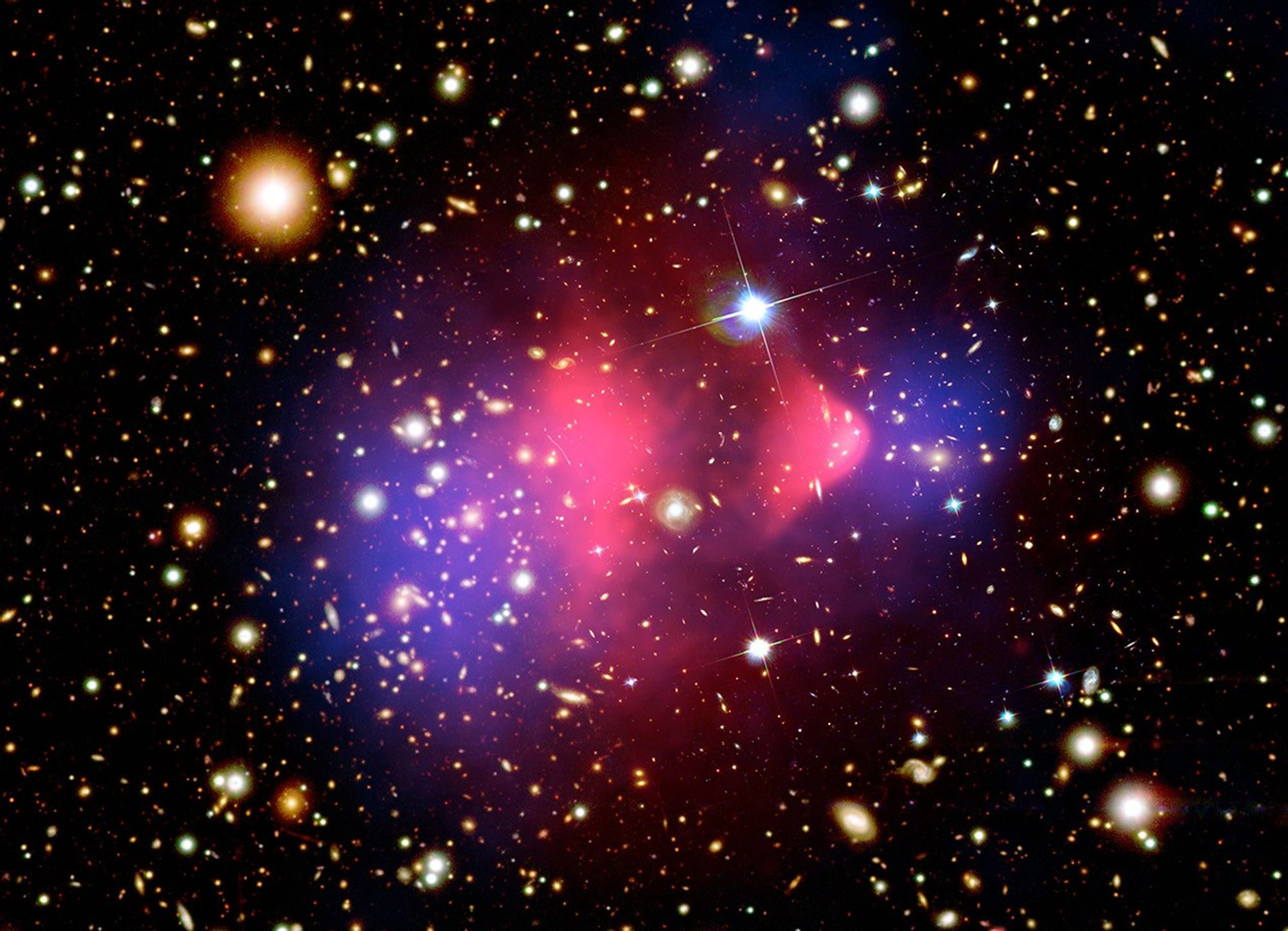
In 2006, scientists studying the Bullet Cluster (formally 1E 0657-56) found some of the strongest direct evidence for dark matter. This galaxy cluster, located about 3.8 billion light years from Earth, formed when two massive galaxy clusters collided in a highly energetic event.
Pink shows hot X-ray gas (normal matter) detected by Chandra while blue shows dark matter mapped through gravitational lensing by Hubble and the Giant Magellan Telescope. The blue regions hold most of the mass but sit apart from the pink gas, since the gas slowed down during the collision while the dark matter passed through largely unaffected offering direct visual evidence of dark matter.
Leading Dark Matter Candidates
Scientists have proposed several explanations for dark matter, and it may even be made of more than one type of particle. Below are some leading candidates, though none have been confirmed yet, and new ones may still emerge.
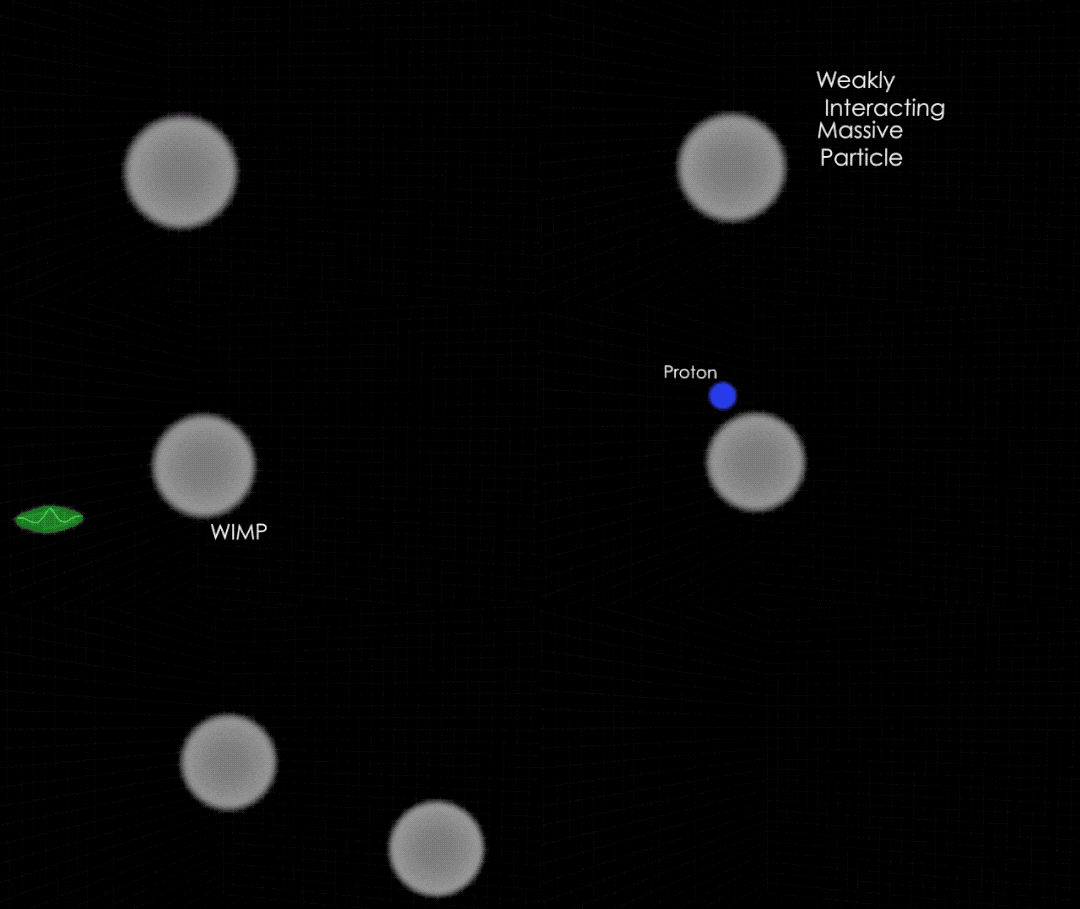
WIMPs (Weakly Interacting Massive Particles) are hypothetical heavy, slow moving particles that don't emit or absorb light and barely interact with normal matter, though they may respond to gravity. When WIMPs collide with each other, they may annihilate and produce gamma rays a signature scientists have searched for in data from NASA's Fermi Gamma ray Space Telescope.